
2026/09/05

ランニングが続かないと悩んでいる方へ。実は僕も、走る習慣が身につくまでずいぶん遠回りしました。始まりは14年前です。柔道部に入った高校生の息子が稽古から帰ってきて、その体を見たときに、思わず自分の体と見比べてしまいました。そのときの正直な気持ちが「この無様な体を、なんとかしたい」でした。
- 走り始めて三日で終了
- 膝や脚の痛みが不安
- 体重が落ちない焦り
- 高いシューズを買う迷い
- 一緒に走る仲間の不在
とにかく何か運動しないといけない。そう思って動き出したものの、ジムの筋トレもスタジオのレッスンも、いろいろ試してはやめての繰り返しでした。最後に残って、今も続いているのがランニングです。
また三日坊主でした。自分は根性がないんですかね……。
その気持ち、よくわかります。僕も何度も同じでしたよ。走り方と決め方を少し変えるだけで、けっこう変わりますから。
この記事では、続かなかったころの僕がつまずいた5つの原因と、そこから見つけたコツを書いてみます。同じところで止まっている方に、少しでも役に立てば嬉しいです。
\まずは足元から見直したい方へ/
初心者向けランニングシューズを見る- ランニングが続かない人の共通点
- ランニングが続かない5つの原因
- 40代がランニングを続けるコツ
- 膝が痛くならない走り方の基本
- 続けるために役立つアイテム3選
- ランニングが続かない人のFAQ
- まとめ 続けられるランニングへ
- English
- What people who quit running have in common
- Five reasons running does not stick
- How runners in their forties keep going
- Running form that spares your knees
- Three items that help you keep going
- Frequently asked questions
- Closing thoughts
ランニングが続かない人の共通点

続かなかったころの自分を思い出すと、いくつか思い当たることがあります。たぶん意志が弱いというより、続く仕組みを作っていなかったのだと思います。走り出す前の段階で、もうつまずく準備をしていたような気さえします。ここでは、僕がやってしまいがちだった3つのパターンを書いてみます。当てはまっても、落ち込む必要はまったくありません。気づけただけで、もう半分は前に進んでいるはずですから。
気合いだけで走り出す落とし穴
気合いを入れて走り出した時期ほど、あっさりやめていました。気合いって、そんなに長くもたないんですよね。
「明日から毎日5キロ」と決めた翌週、雨がひと晩降っただけで計画は崩れました。一度崩れると立て直す気力が湧かず、そのままフェードアウト。何度やっても同じでした。
それなら最初から、走らない日を決めておいたほうがよさそうです。
最初の目標設定が高すぎる問題
目標が高いと、できなかった日ばかりが積み重なります。何年も運動していない体に5キロは、思っていた以上にきついものでした。
最初は家の周りを10分だけ。少し物足りないくらいでちょうどいいのかもしれません。翌日また走りたくなりますから。
走る時間を待ってしまう状態
「時間ができたら走ろう」と思っているうちは、その時間はなかなかやってきませんでした。仕事も家のことも、すきまがあれば入ってきます。
だから僕は、少しでも空きができたらその場で着替えるようにしました。待つのではなく、見つけたときに動く。それだけで走る回数はずいぶん変わりました。
ランニングが続かない5つの原因

ここからは、僕が実際につまずいた原因を5つに分けて書いてみます。振り返ってみると体力の問題というより、環境と考え方の問題が大きかったように思います。裏を返せば、そのあたりを変えれば誰でも続けられるということかもしれません。どれか一つでも心当たりがあれば、そこから読んでみてください。全部当てはまっても大丈夫です。僕がまさにそうでしたから。原因がはっきりすると、次にやることも自然と見えてきます。
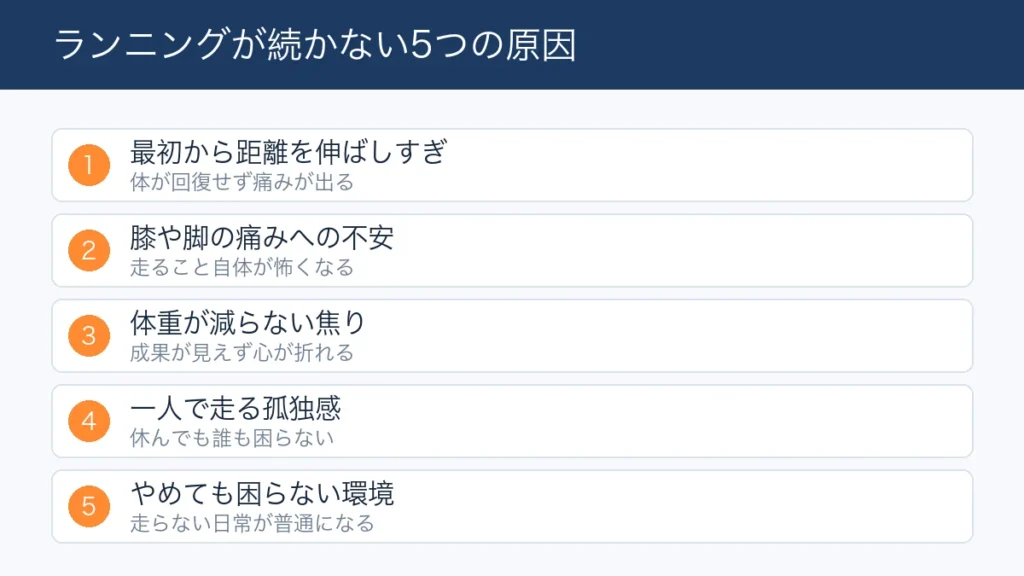
原因1 最初から距離を伸ばしすぎ
走れるようになってくると、つい距離を伸ばしたくなります。でも急に増やすと、あとで体が正直に返してきました。
増やすのは1週間で1割くらいにしておくと安心だと思います。急がないほうが、結局は遠くまで行けるようです。
原因2 膝や脚の痛みへの不安
一度痛みが出ると、走るのが少し怖くなります。不安を抱えたまま走っても、あまり楽しくありません。
僕の場合は走り方と休み方を見直したら楽になりました。ただ、強い痛みや長引く痛みは我慢せず、整形外科などで診てもらってくださいね。
原因3 体重が減らない焦り
走り始めて2週間、体重計の数字が動かないと、けっこう心が折れます。実際に変化が見えるのは、もう少し先のようです。
数字が動かない時期は、走った回数や距離を書き残しておくと、なんとか踏ん張れました。
原因4 一人で走る孤独感
ひとりで黙々と走る時間は、慣れるまで少し退屈でした。誰が見ているわけでもないので、休んでも困りません。
音楽を聴いたり、走った記録をSNSに残したり。外とゆるくつながっておくと、意外と続くものです。
原因5 やめても困らない環境
そもそも、走らなくても毎日はふつうに回ります。だからこそ、やめにくい状況をこちらから作るしかないのかもしれません。
大会に申し込む、家族に宣言する、ウェアを玄関に置いておく。小さな仕掛けが背中を押してくれます。
40代がランニングを続けるコツ

40代を過ぎてからのランニングは、若いころと同じようにはいきません。疲れが抜けるのに時間がかかりますし、仕事も家のことも待ってくれませんから。それでも年齢に合ったやり方を選べば、ちゃんと続けられると感じています。頑張る量を増やすより、やめない工夫を少しずつ足すほうが性に合っていました。ここでは、僕が今も続けている3つを書いてみます。お金も道具もいりません。
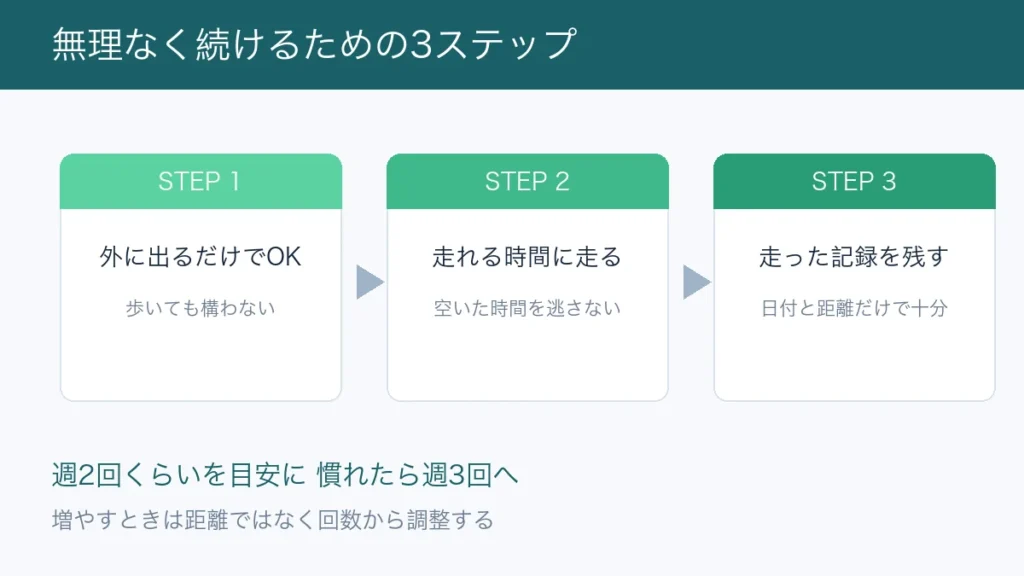
歩いてもいいルールづくり
「走る」と決めるから、しんどくなるのだと思います。「歩いてもいいから外に出る」に変えたら、ずいぶん気が楽になりました。
外に出ると、結局は少し走りたくなるものです。まずは玄関を出るところまでを目標にしてみてはどうでしょう。
走れる時間を逃さない工夫
曜日をきっちり決めなくても大丈夫だと思います。僕はその日その日で、空いた時間に走るほうが性に合っていました。
大事なのは、走れそうな時間ができたときにすぐ動けるようにしておくこと。ウェアを玄関に出しておくだけでも、ずいぶん違います。
記録を残す仕組みづくり
続いている実感は、やっぱり記録からしか得られない気がします。日付と距離だけのメモでも十分でした。
あとから見返したときの「けっこうやってきたな」という感覚が、やめたい気持ちを引き止めてくれます。
膝が痛くならない走り方の基本

膝の痛みは、走るのをやめる理由としていちばん多いのではないでしょうか。僕の経験では走り方と休み方を見直すと、ずいぶん楽になりました。ただし痛みの原因は人それぞれですし、素人が決めつけるのはよくないと思います。強い痛みが続くようなら病院で診てもらうことを前提に、日ごろ気をつけている3つを書いてみます。特別な練習は何もいりません。今日の一歩目から意識を変えるだけで、脚の負担はけっこう減る気がします。
着地の衝撃を減らす歩幅
歩幅を大きく取ると、着地の衝撃が膝に集まってしまうようです。少し狭めにして、足を体の真下に置くくらいがちょうどよさそうでした。
歩幅を狭めるとテンポが上がって、かえって軽く走れる感じになります。
走る前後のかんたんケア
走る前の準備と、走ったあとのケア。この2つを飛ばした日は、翌日にしっかり残りました。
走る前に関節を軽く動かして、走ったあとはふくらはぎと太ももを伸ばす。5分もあれば足ります。
痛みが出たときの休む判断
痛みをこらえて走るのは、たぶん遠回りです。休むのも練習のうち、くらいに考えるようにしています。
腫れや熱がある痛み、歩くだけで痛むときは、無理せず専門家に相談してくださいね。
続けるために役立つアイテム3選

道具を集めることが目的になってしまうと本末転倒ですが、体を守る道具と記録を残す道具は、ずいぶん助けになりました。高いものを最初から買う必要はないと思います。ここでは、僕が最初に用意してよかったと感じた3つを紹介します。選ぶときに見ていたのは「痛みを減らせるか」と「続きが見えるか」の2つだけでした。この2点さえ押さえておけば、値段にこだわらなくてもいいと思います。買う前に、今の自分に何が足りていないかを考えてみるといいかもしれません。
クッション性の高いシューズ
初心者のうちは、クッションの厚い靴が合っているようです。着地の衝撃を吸ってくれるので、膝がずいぶん楽になりました。
軽くて高機能なモデルは、走れるようになってからで十分だと思います。
記録が残るスマートウォッチ
距離や時間が勝手に残ると、記録をつける手間がなくなります。数字が積み上がっていくのを見るのが、けっこう励みになりました。
まずは手ごろなモデルでも十分使えます。
足に優しいランニングサンダル
足裏の感覚を取り戻したい方には、ランニングサンダルという選択肢もあります。僕も試してみて、自然な着地を覚えるのに役立ちました。実際にサンダルで大会を走った話は小布施見にマラソン2026、初サンダルで走ってきたに書いています。
ただ慣れるまでは距離を短めに。いきなり長く走ると、僕のように脚を痛めてしまうので気をつけてください。
\続かない原因は靴にあるかもしれません/
クッション性で選ぶシューズを見るランニングが続かない人のFAQ

最後に、よく聞かれることをまとめてみました。迷いが減ると、走り出すまでが早くなります。どれも僕自身が立ち止まったところばかりです。走る前にあれこれ考える時間が長いほど、外に出るのが億劫になってしまいますから。気になるところだけ拾い読みしてもらえれば十分だと思います。答えはどれも単純で、特別な道具も知識もいりません。正解はひとつではないので、合いそうなものだけ持って帰ってください。
週に何回走れば続けやすいのか
週2回くらいが現実的だと感じています。週1回だと体が慣れず、毎日だと疲れが抜けませんでした。
慣れてきたら週3回へ。増やすときは距離より回数からのほうが安全そうです。
走る時間帯は朝と夜のどちらか
走れる時間ができたときに走るのがいちばんだと思います。朝か夜かで悩むより、空いた時間を逃さないほうが続きました。
仕事も家のことも、日によって変わりますからね。決めていた時間に走れなくても、動ける日に動けば十分です。
雨の日はどうすればいいのか
無理に走らなくていいと思います。休む日と決めてしまえば、変な罪悪感も残りません。
かわりに家でストレッチや階段の上り下りをしておくと、翌日の走り出しが楽になります。
高いシューズは必要なのか
最初から高いモデルを買う必要はないと思います。ただ、あまり安すぎる靴はクッションが薄くて、膝にきました。
ランニング用と書かれた手ごろなものを選べば、まずは十分ではないでしょうか。
体重が減らないときの対処法
走った分だけ食べていないか、まず振り返ってみてください。僕はこれで何度もやらかしています。
体重より、ウエストや体調の変化を見ていたほうが、気持ちが続きます。
ウォーキングから始めてもよいか
まったく問題ないと思います。運動から離れていた方ほど、歩くところから始めたほうが安全です。
歩くのに慣れたら1分だけ走ってみる。それを繰り返すうちに、走れる時間は自然に伸びていきます。
まとめ 続けられるランニングへ

ランニングが続かないのは、根性が足りないからではないと思います。原因は仕組みのほうにあって、そこは今日から変えられます。距離を欲張らない、走れる時間を逃さない、痛かったら休む。この3つだけでも、ずいぶん変わりました。うまくいかない週があっても大丈夫です。やめた日を数えるより、戻ってきた日を数えていきましょう。三日坊主を10回繰り返しても、11回目に走り出せばそれは立派な継続だと思っています。
- 続かない理由は意志ではなく仕組み
- 最初の目標は物足りない程度に設定
- 走れる時間を逃さず動く
- 痛みが出たら休む勇気も必要
- 記録の可視化が最大の味方
まずは明日、10分だけ外に出てみませんか。走れなくても大丈夫です。玄関を出た時点で、三日坊主だった昨日の自分は少し超えているはずですから。
\明日の一歩を、軽くする/
ランニングシューズを探してみるこのブログでは、痛くならない走り方や続けるための工夫を、58歳の等身大の体験として書いていきます。よかったら、また覗きにきてください。
――
よかったらシェア・フォローしてもらえると嬉しいです。
Xでシェア /Facebookでシェア /はてなブックマーク /LINEでシェア
フォローはこちら:X(@a_kuma52) /Instagram(@bagabondo48) /Facebook(Akumankuma)
日本語版はここまでです。ここから先は英語版になります。
English
2026/09/05
It started fourteen years ago. My son had joined the judo club at high school, and one evening he came home from practice. Looking at him, I found myself comparing his body to my own, and the honest thought that surfaced was this: I have to do something about this sorry state I am in.
So I began moving. I joined a gym and lifted weights, I tried studio classes, and one after another they fell away. Running was the one thing that stayed.
Here is the thing: running does not stop because your willpower is weak. People who quit share the same structural problems, and once you fix those, the habit becomes far easier to keep.
This article covers the five reasons running does not stick, and the tricks that let you keep going without forcing it. It is based on the real experience of a 58-year-old who has quit and restarted more times than he would like to admit. Not sports science, just honest talk about what to do with the days you do not run.
\ Start with what is under your feet /
See running shoes for beginners(Japanese site)What people who quit running have in common
People who quit share clear patterns. The short version: you are not failing because of willpower, you are failing because you never built a system. The setup for failure happens before you even step outside. Below are the three patterns that trip up most beginners. None of them are unusual, and noticing one in yourself is already half the fix.
The trap of starting on pure motivation
The harder you push off with sheer motivation, the sooner you stop. Motivation simply does not last.
Decide to run five kilometers every day, and a single rainy morning breaks the plan. Once broken, most people never rebuild it. Decide your rest days in advance instead.
Setting the first goal far too high
When the goal is too high, missed days pile up and confidence drains away. For a body that has not moved in years, five kilometers is a serious load.
Ten minutes around the block is plenty at first. Finishing while you still want more is exactly what brings you back tomorrow.
Waiting for the right time to appear
As long as you think you will run when you find the time, that time never arrives. Work and family will happily fill every gap.
So when a gap does open, change straight away and get out. Do not wait for it, move when you spot it. That alone changed how often I ran.
Five reasons running does not stick
Here are the five reasons, organized. The conclusion first: most of the problem is not fitness, it is your environment and your mindset. Which means anyone can keep going once those change. Start by finding which one describes you. Every item below is something I have personally stumbled over.
1. Increasing distance too quickly
The urge to run further grows day by day. Push the distance up too fast, though, and your body protests.
A safe guide is no more than ten percent more per week. Build slowly and you will go further in the end.
2. Fear of knee and leg pain
Once pain shows up, running itself becomes frightening. Nobody enjoys a run taken under a cloud of worry.
Most aches ease with a review of your form and your rest. That said, sharp or lasting pain deserves a doctor, not guesswork.
3. Frustration when the weight will not drop
Two weeks in with no change on the scale, and most people give up. Visible weight change usually takes a month or more.
During that flat period, log your runs so the effort becomes visible. Seeing the stack keeps you honest.
4. The loneliness of running alone
Running by yourself feels tedious before it feels good. Nobody is watching, so nobody minds if you skip.
Music, a podcast, or posting your log online. A loose connection to the outside world carries you through.
5. Nothing bad happens when you quit
Life runs perfectly well without running. That is exactly why you need to build a reason not to stop.
Enter a race, tell your family, leave your kit by the door. Small devices push you out.
How runners in their forties keep going
Running in your forties does not work the way it did in your twenties. Recovery takes longer, and work and family fill the calendar. Still, choose an approach that matches your age and the habit will hold. What matters is not how hard you push, but how you handle the days you miss. Here are three things you can start today, none of which cost money.
Allow yourself to walk
Deciding to run is what kills the habit. Change it to going outside, walking allowed, and the barrier drops sharply.
Once outdoors, most people want to jog a little anyway. Make getting out the door the goal.
Catching the time when it opens up
There is no need to lock in particular days. Plans shift, so running whenever a gap appears is far more realistic.
What matters is being ready to move the moment that gap shows up. Leaving your kit by the door is enough.
Build a way to keep records
The feeling of progress comes only from records. A notebook with the date and the distance is enough.
That look back at everything you have done holds you steady when you want to stop.
Running form that spares your knees
Knee pain is the number one reason beginners stop. To put the conclusion first: most of it eases once you review your form and your rest. Causes differ from person to person, so self-diagnosis is unwise. Assuming you see a doctor for anything persistent, here are three basics worth minding every day.
A shorter stride to soften the landing
A long stride concentrates impact in the knee. Keep the stride small and land with your foot under your body.
Shorten it and your cadence rises, which actually makes running feel lighter.
Simple care before and after
Skip the warm-up and the cool-down, and the fatigue follows you into tomorrow.
Move the joints before, stretch calves and thighs after. Five minutes is enough.
Knowing when to rest
Running through pain is the long way round. Treat rest as part of the training.
Swelling, heat, or pain when simply walking means stop and talk to a professional.
Three items that help you keep going
Collecting gear should never become the point, but equipment that protects your body and records your effort genuinely helps you continue. Nothing expensive is required. Here are three items worth prioritizing as a beginner, chosen on two criteria only: reduce pain, and make progress visible.
Shoes with real cushioning
Beginners benefit most from thick cushioning. It absorbs the landing and takes load off the knee.
Lightweight racing models can wait until you have the legs for them.
A watch that logs your runs
When distance and time record themselves, the effort of logging disappears. Watching the numbers accumulate becomes its own reward.
An entry-level model covers everything you actually need.
Running sandals that respect your feet
If you want to feel the ground again, running sandals are an option. They make a natural landing easier to learn.
Keep the distance short until you adapt. Going long too soon will hurt you.
\ Your shoes may be the real reason /
Browse cushioned running shoes(Japanese site)Frequently asked questions
Finally, the questions I hear most from people who cannot make running stick. Fewer doubts means less time between thinking about it and doing it. Every one of these is a place beginners get stuck, and I have stood in each of them myself.
How many times a week should I run?
Twice a week is realistic. Once is too little for your body to adapt, and daily leaves no recovery.
Move to three when it feels easy. Add frequency before distance.
Morning or evening?
The best time is whenever you actually have time. Rather than agonizing over morning versus evening, take the gap your day gives you.
Work and family shift from day to day. If you miss the hour you planned, let it go and run on a day you can move. That is enough.
What about rainy days?
There is no need to force it. Declare rain a rest day and the guilt disappears.
Stretch or take the stairs indoors instead and tomorrow starts easier.
Do I need expensive shoes?
No high-end model is necessary at the start. Very cheap shoes, though, have thin cushioning and invite knee trouble.
Anything clearly sold as a running shoe in the mid price range will serve you well.
What if the weight will not move?
Check whether you are eating back everything you burn. Running consumes fewer calories than most people assume.
Watch your waist and how you feel rather than the scale.
Can I start with walking?
Absolutely. If you have been away from exercise, walking is the safer entry.
Once walking feels easy, run for one minute. Repeat, and the running stretches out on its own.
Closing thoughts
Running does not stop because you lack grit. The cause is structural, and structures can be changed today. Do not chase distance, take the time when it opens up, and rest when it hurts. Those three alone will steady the habit. Bad weeks will happen. Count the days you came back, not the days you missed. Quit ten times and start again on the eleventh, and that still counts as continuing.
Tomorrow, just step outside for ten minutes. You do not even have to run. The moment you are out the door, you have already beaten the version of yourself who quit after three days.
\ Make tomorrow’s first step lighter /
Find your running shoes(Japanese site)On this blog I share how to run without pain and how to keep going, based on the real experience of a 58-year-old runner. I hope you will come back for the next one.


コメント